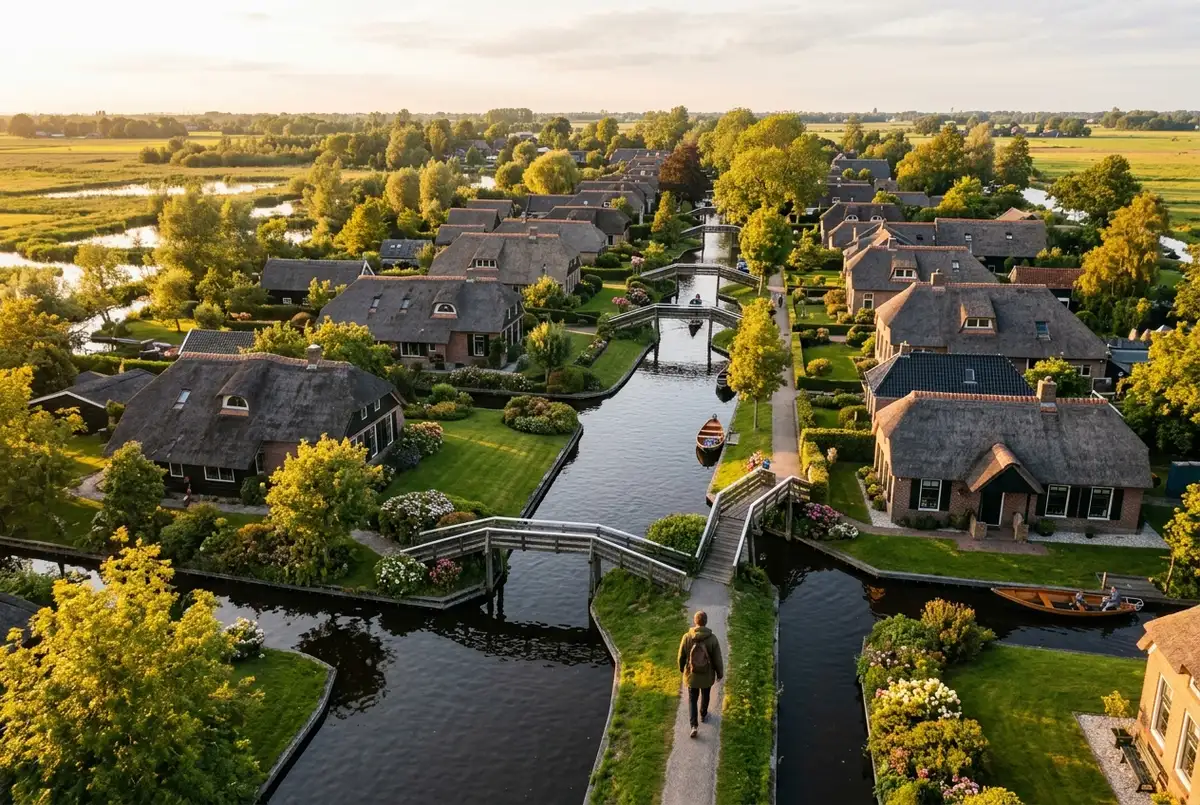
Giethoorn village sits in the northeastern Dutch province of Overijssel, roughly a 1h40 drive or train-and-bus ride from Amsterdam, and it is one of the few places in the Netherlands where the historic center genuinely has no roads running through it. I would not call that a gimmick. The canals, footpaths and wooden bridges really are how residents get around, and that single fact explains almost everything else people ask about this village.
I think the “Venice of the Netherlands” label gets thrown around loosely by a lot of travel sites, but here it actually holds up, and I will walk through exactly why below. If you want to compare every way to get onto the water yourself once you understand the layout, every Giethoorn boat tour we cover sits on the homepage with price and duration side by side, and if you would rather see all seven tours and rentals lined up on one page with the same details, comparing every Giethoorn tour and ticket by price and duration is the faster route to a decision.
Where Is Giethoorn, Exactly?
Giethoorn sits in the municipality of Steenwijkerland, in Overijssel province, close to the southern edge of Weerribben-Wieden National Park. It is about 100 kilometers northeast of Amsterdam, which puts it well outside the capital’s immediate day-trip radius but still reachable within a long half day if you plan the transport carefully.
I would treat the distance as the single biggest factor in deciding how to visit. A quick stopover is not realistic given the travel time involved, so most visitors either commit to a full day or build in an overnight stay nearby.
Why Is Giethoorn Called the Venice of the Netherlands?
Giethoorn earned the nickname because its historic center was built on a cluster of small peat islands with no roads connecting them, only canals, footpaths and wooden arch bridges. For centuries, boats were not a tourist novelty here, they were the only practical way to move people, peat and goods between houses.
Honestly, I think the comparison to Venice oversells the architecture a little, Giethoorn is a quiet rural village, not a grand historic city, but the underlying truth, a settlement that genuinely cannot be crossed by car, is real and still shapes daily life for the people who live here.
How Did Giethoorn’s Canals Actually Get Built?
The canals were not designed for charm. They were dug out during centuries of peat extraction, when local farmers cut and removed peat for fuel, leaving behind a patchwork of waterlogged pits and narrow islands. Over time, those pits became the canal network you see today, and the excavated peat soil was piled up to form the raised paths where houses now stand.
I find this the most underrated fact about the village. The entire layout is a side effect of an industrial process, not a planned tourist attraction, and that history is still visible in how irregular and narrow some of the canals are compared to a formally engineered waterway.
What Do the Thatched Farmhouses and Bridges Tell You About the Village?
Giethoorn’s thatched-roof farmhouses date back generations, and more than 180 wooden bridges connect the footpaths and private gardens that line the canals. Walking the Binnenpad, the main pedestrian route through the village center, you pass dozens of these bridges in a single stroll, each one a small, practical piece of everyday infrastructure rather than a built attraction.
I would slow down and actually look at a few of these farmhouses rather than just photographing the canals. The reed roofs, the small footbridges built to a single household’s exact needs, and the garden layouts all tell you more about how this community actually functions than the postcard shots do.
What Can You Actually Do in Giethoorn?
Most visitors spend their time walking the canal paths, crossing bridges, browsing a handful of small shops and cafes, and getting onto the water in some form, whether that is a guided cruise, a self-drive rental or a canoe. My full list of the best things to do in Giethoorn breaks down all twelve of the activities I would actually recommend, ranked by how well they suit a first visit.
I would not try to see everything in one trip if your time is short. Pick two or three activities that genuinely interest you rather than rushing through a checklist, the village rewards a slower pace more than most Dutch day-trip destinations do.
When Is the Best Time to Visit Giethoorn?
Giethoorn gets noticeably crowded in the late morning and early afternoon during peak season, roughly June through August, when both day-trip coaches and independent travelers converge on the same narrow footpaths at once. My best time to visit Giethoorn guide covers the month-by-month weather pattern and exactly when the canals empty out.
If your dates are flexible at all, I would lean toward an early morning arrival regardless of season. The crowd pattern matters more than the month in my experience, a quiet weekday morning in July still beats a busy Saturday afternoon in a shoulder month.
Is Giethoorn Worth Visiting?
Yes, with some honest caveats about scale and crowding that most travel blogs skip over. My honest answer on whether Giethoorn is worth visiting weighs the genuinely unique, car-free canal village against the fact that it is a small place that can feel overrun at peak times.
I would say the short version is this: Giethoorn delivers on the photos, but only if you manage the timing and pick the right way to see it. A midday visit in August with no plan will frustrate you more than it should.
How Do You Find Your Way Around Giethoorn?
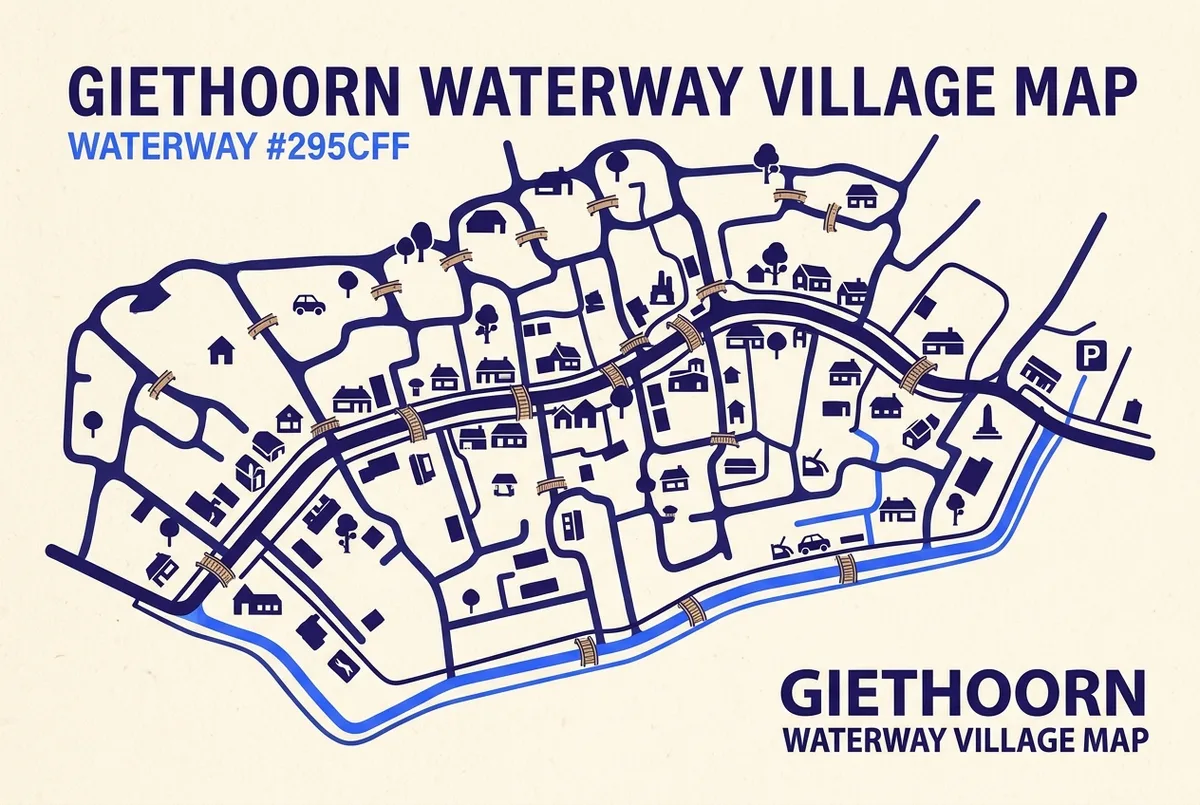
Giethoorn’s village center runs along two main canal-side footpaths, the Binnenpad and the Beulakerpad, with paid car parks sitting at the village edge rather than inside the historic core itself, since cars genuinely cannot reach most of it. My Giethoorn map and parking guide lays out exactly where to leave your car and how the two paths connect.
I would plan your parking before you arrive rather than circling once you get there. The lots fill up fast on sunny weekends, and arriving without a plan costs you time you would rather spend on the water.
Where Should You Eat and Stay in Giethoorn?
A handful of waterside cafes and restaurants sit directly on the canal paths, and my where to eat in Giethoorn guide rounds up the spots worth planning a lunch stop around. If you are weighing an overnight stay against a day trip, my where to stay in Giethoorn guide compares the two honestly.
My take is that most first-time visitors do fine treating Giethoorn as a day trip rather than an overnight stay, the village itself is compact enough to see thoroughly in half a day once you add in boat time.
What’s the Best Way to See Giethoorn by Boat?
This is the part of a Giethoorn visit I would not skip under any circumstances. The canals are the whole point of the village, and there are four genuinely different ways onto the water: a guided cruise with a skipper handling the narration, a self-drive electric boat with no license required, a canoe or kayak for a quieter pace, and a private boat with your own captain. My complete Giethoorn boat tours and rentals guide compares all four formats side by side.
I would pick based on how much you want to do yourself. If you would rather sit back and listen to a guide explain the history as you go, book a cruise. If steering your own course through the canals sounds more appealing, the self-drive option is genuinely easy for a first-timer.
If you want a specific recommendation rather than comparing formats yourself, the Giethoorn Guided Day Trip with Canal Cruise is the tour I would book first for a straightforward, well-reviewed way to combine round-trip transport from Amsterdam with a 1-hour canal cruise and close to two hours of free time in the village.
Should You Visit Giethoorn as a Day Trip from Amsterdam?
For most travelers based in Amsterdam without a car, yes, and a guided day trip solves the transport problem in one booking rather than piecing together trains, buses and a return connection yourself. My Giethoorn day trip from Amsterdam guide covers what a typical guided day includes and how the timing actually plays out.
I would only skip the guided-tour route if you already have a car or are comfortable with Dutch public transport, since self-driving or taking the train genuinely does cost less if your schedule allows for the extra planning.
My Honest Recommendation
If you take one thing away from this guide, it is that Giethoorn’s appeal is real but narrow: a genuinely car-free canal village with centuries of peat-digging history behind its layout, best experienced slowly, on foot and on the water, rather than rushed through on a tight schedule. I would build your day around getting onto a boat and giving yourself real time to walk the footpaths, not around trying to tick off every cafe and shop in one pass.
Whichever way you choose to see the canals, the Giethoorn Guided Day Trip with Canal Cruise remains the option I would point a first-time visitor toward, since it bundles the transport, the cruise and real free time into one straightforward booking.
Frequently Asked Questions
Is Giethoorn an actual village or a tourist attraction built for visitors?
It is a real, inhabited village. The canals and bridges were originally built out of necessity during centuries of peat extraction, not designed for tourism, and local families still live along the same waterways that visitors walk today.
How far is Giethoorn from Amsterdam?
About 100 kilometers, which works out to roughly 1h40 by car or a combination of train and bus. There is no direct train line all the way to the village itself.
Can you walk through all of Giethoorn in one day?
Yes, the historic center is compact enough to walk thoroughly in a few hours, though I would still add boat time to see the canals properly rather than only the footpaths.
Does Giethoorn have cars at all?
Residents and visitors can drive to paid car parks at the village edge, but the historic core itself has no roads, so cars stop there and everyone continues on foot, by bike or by boat.